GM Craft
Tavern Names: 6 Formulas, d20 Tables and 60+ Name Ideas
Six formulas for naming a tavern mid-session, d20 tables to roll on, names by mood and ancestry, and shop names that say what's for sale.
How to find out what your GM already owns without spoiling the surprise, then gift ideas sorted by the way they run the game, by budget, and a list of what to skip.

The best gifts for dungeon masters fix a problem they already have at the table. A battle mat suits the GM who sketches dungeons on scrap paper, and a screen with swappable pages suits the one who flips through rulebooks mid-fight. The worst ones are the things every gift list pushes first, like yet another set of dice or a core rulebook already sitting on their shelf.
You don’t need to have played, or to understand the rules, to buy well. Match the gift to how they run the game, and if you have a few days, check what they already own first, or ask another player to check for you.
| If they… | Start with |
|---|---|
| Prep for hours every week | A book on lighter prep, plus index cards and a binder |
| Improvise everything | Random tables and ready-made taverns, shops and NPCs |
| Run games online | An ambient sound subscription or a virtual tabletop license |
| Paint miniatures (or want to) | A beginner painting kit, paint refills or a carrying case |
| Already have everything | Your time: take notes, run a one-shot so they can play |
| Just started running | A customizable screen with reference pages, and a battle mat |
Most bad DM gifts are duplicates. You can check most of it yourself in one game night.
Look at the table during or after a game. You’re checking for six things:
Then ask questions that sound like small talk. GMs love talking about their game, so nobody gets suspicious:
| Question you ask | What it tells you |
|---|---|
| “What’s the most annoying part of running the game?” | The problem your gift should solve (prep time, tracking turns, finding maps) |
| “Are you starting anything new after this campaign?” | Which system and setting they’ll need material for next year |
| “Do you ever get to play instead of run?” | Whether a gift of playing time would mean more than an object |
| “Is the group meeting online or at your place this winter?” | Physical or digital gift |
| “Would you rather prep less or prep better?” | Prep tools versus ready-made content |
The best source is usually another player in the group, who can tell you in thirty seconds whether the GM uses miniatures. If your group is drawing names this year, our Secret Santa questionnaire has more questions you can borrow.
One more check: the system. “D&D” covers several editions, and plenty of GMs run Pathfinder, Daggerheart or small indie games. A rules reference for the wrong edition is a doorstop. Look at the cover of the book they keep open.
Notebooks, color-coded tabs and a slightly hunted look on Thursday night: the best gift for this GM gives them prep time back.
A book on lean preparation is a good start. Sly Flourish’s Return of the Lazy Dungeon Master won the 2019 Gold ENNIE for Best Electronic Book and is built around an eight-step checklist for lighter game prep; the publisher sells it as PDF/ePub and in hardcover. Pair it with a plain binder and a pack of index cards; our 20-minute prep method shows what goes on them.
Their notes fit on a sticky note and the players love it. What they need is material to pull out mid-scene when the party wanders somewhere unplanned: random tables, ready-made shops and taverns, names for NPCs who were never supposed to exist.
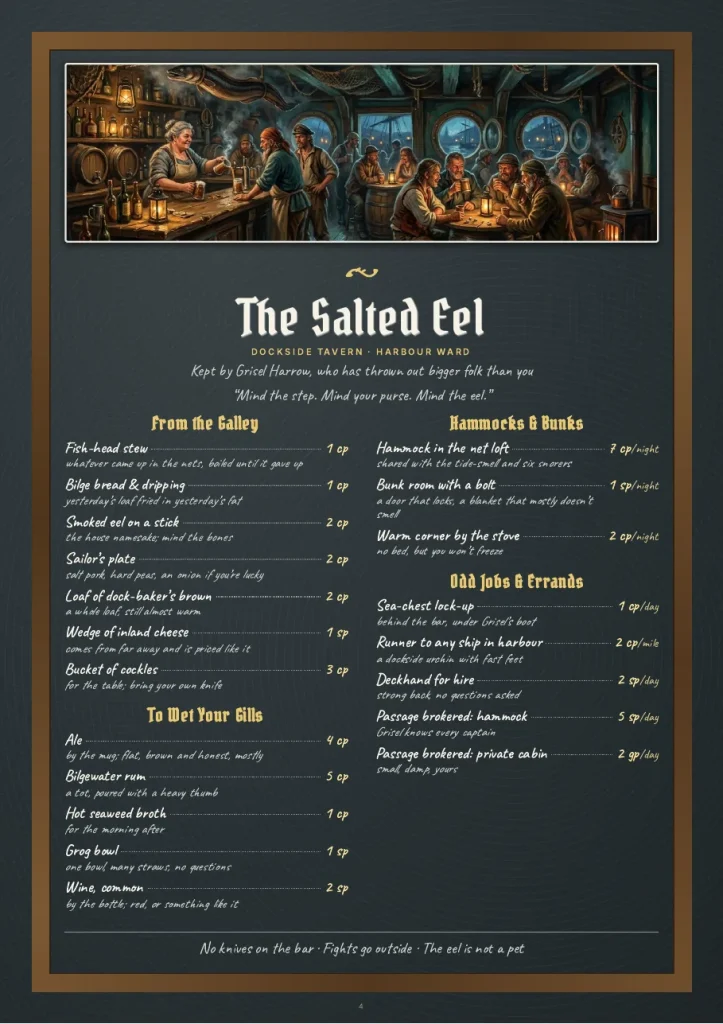
Generator-style books and decks work here because they don’t ask for prep. Our Tavern & Shop Kit is built this way: six printable tavern menus, six shop price lists, twelve NPC cards and d20 tables for rumors, 5E compatible (2024 rules).
For a GM running winter sessions, the Frostfeast Winter GM Toolkit does the same for snow: weather and hazard tables, a festival generator and a d100 table of gifts the characters can find.
A screen and a battle mat do little for someone who plays over video.
Syrinscape, an ambient sound and music app for tabletop games, sells subscription vouchers you can buy for someone else; each code activates two months of access, and the page suggests players pool their money to buy one for their GM. For indie games, itch.io lets you tick a gift checkbox and send the purchase from a form after checkout.
The virtual tabletop itself can be the gift. Foundry Virtual Tabletop is a one-time license, and only the host needs one for the whole group. To give it, the GM registers an account on the Foundry site, you buy the license as if for yourself, then move it to their account with the License Transfer form. The GM has to register first, so this one isn’t a surprise: put a note in the card and do the transfer together. Ask which VTT they use before buying, since a campaign already built on another platform rarely moves.
If they complain about echo or a dim camera on game night, a decent headset or a small desk light is an unglamorous gift that gets used every week.
Miniatures are a gift only for a GM who uses them or has said they want to start. For anyone else, a box of unpainted plastic is homework with a bow on it.
For the curious beginner, a starter kit is the right size of commitment. Reaper’s Learn to Paint Kit: Core Skills comes with three figures, eleven paints, two brushes and an instruction guide by painter Rhonda Bender; a companion kit, Layer Up!, can be used alongside it in either order.
An experienced painter is easier: ask another player which paint brand they use and buy refills, or get a carrying case so painted figures survive the trip to the game. Chessex lists figure carrying cases among its accessories.
When someone asked what to get their group’s DM on r/DungeonMasters, replies included “What’s he got already?”, “Opportunity to play” and “Take notes for him during the sessions.” The last two cost nothing.
Some ideas that land well:
If you still want to give something dice-related to someone who owns plenty, give storage instead of more dice. Wyrmwood makes dice vaults, rolling trays and towers, and a vault holds one favorite set: you give the box and they choose which set goes in it.
If the whole group is chipping in for the GM and swapping presents among yourselves the same night, our Christmas gift exchange games guide has white elephant rules and a dice swap you can run at the table.
A new GM is still learning where everything is, so reference beats decoration. A customizable screen with reference pages in the pockets (more on screens in the next section) keeps the rules they look up most in front of them. A battle mat makes the first fights easier to follow for everyone. The Sly Flourish book above helps them build a prep routine before bad habits set in, and our session zero questions help them start the first campaign on the right foot. Check which edition they’re learning before buying any reference.
For a GM who runs games in person, a battle mat is the safest bet, especially if they sketch maps on scrap paper. A GM who runs everything out loud may not want one, so ask first. Chessex’s Reversible Battlemat has one-inch squares on one side and one-inch hexes on the other, a 23.5 by 26 inch playing surface, and ships rolled. Add a pack of wet-erase markers: Chessex says its mats work with wet-erase markers only.
A customizable screen gets used every session. Hammerdog Games’ World’s Greatest Screen is a folding screen with eight clear pockets across four panels, in portrait and landscape versions, including an A4 one, and you can write on it with wet or dry erase markers. The GM slides in reference pages facing them and art facing the players.
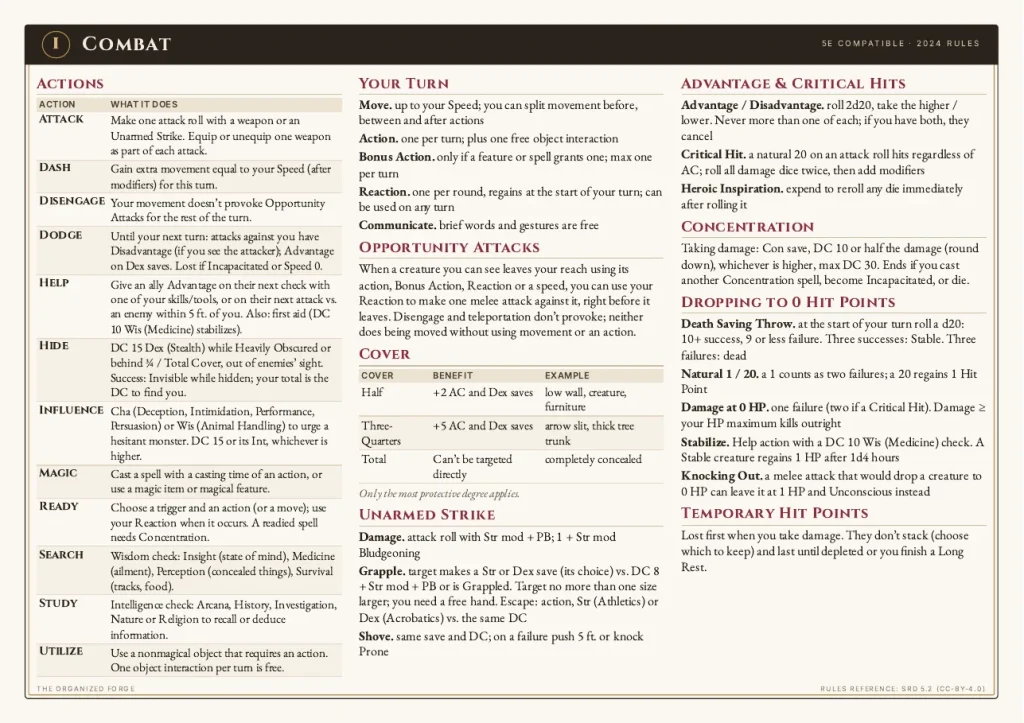
Our GM Screen Inserts are four 5E compatible rules panels (combat, conditions, exploration, and a GM toolkit with DCs and encounter math) plus four illustrated player-side panels, in A4 and Letter, portrait and landscape. Print them on card stock and tuck them into the pockets before you wrap the screen.
If their fights tend to sprawl, with a dozen monsters and players asking whose turn it is, add an initiative tracker or a deck of condition cards. Everyone at the table can see the turn order and who is poisoned or prone, so the GM answers fewer questions.
Prices below are indicative bands from the makers’ own sites at the time of writing. They change, so check before you order.
| Budget | Ideas |
|---|---|
| Under $15 | Wet-erase markers for a battle mat (a Chessex 4-pack sells for under $15), a small indie game on itch.io |
| $15 to $30 | A reversible battle mat (Chessex’s 1-inch grid mat is under $30), a two-month Syrinscape voucher (under $30) |
| $30 to $50 | A customizable screen with pockets (Hammerdog’s is under $50), a single-set dice vault (Wyrmwood’s starts under $50), a beginner miniature painting kit (Reaper’s is under $50) |
| $50 to $100 | A Foundry VTT license (around $50), a personal dice tray (Wyrmwood’s starts under $100), or a customizable screen plus a GM book |
| Over $100 | A screen-mounted two-way dice tower (Wyrmwood’s is over $150), or a group-funded commission of the party |
Skip these unless you’ve confirmed otherwise:
Physical gifts need shipping time, and December fills up fast. If the game is tomorrow, a printable gift is the realistic option: Etsy’s instant downloads become available once your payment is confirmed, and you print them at home or at a copy shop on heavier paper.
To make a printable feel like a present, slide the pages into a cheap binder or folder and write a short note on the first page about the session that made you want to say thanks. For a whole kit, our Ultimate GM Vault bundles the GM Screen Inserts with session prep sheets, a campaign recap journal, a combat kit and a quest board. If you get the Vault, skip the separate Inserts.
Whatever you choose, the card matters more than GMs admit. Write one specific line, like “the bridge scene in October was the best night of my year.”
This week: text another player one of the questions above and ask them to photograph the GM’s shelf after the next session. Once you know what’s there, pick from the section that matches how your GM runs the game.
GM Craft
Six formulas for naming a tavern mid-session, d20 tables to roll on, names by mood and ancestry, and shop names that say what's for sale.
GM Craft
How many spell cards each class really needs, why 2014 cards go wrong at a 2024 table, how to print them at the right size, and a simple system for using them mid-fight.
GM Craft
How to run a horror one-shot for your D&D table in a single evening: a run sheet, a safety talk script, visible clocks, the rule of escalation and six premises you can prep this week.